Biocracked
←

#whole foods

1 article
Approach: macro science (with a conceptual split). Palette: D, bold color field.

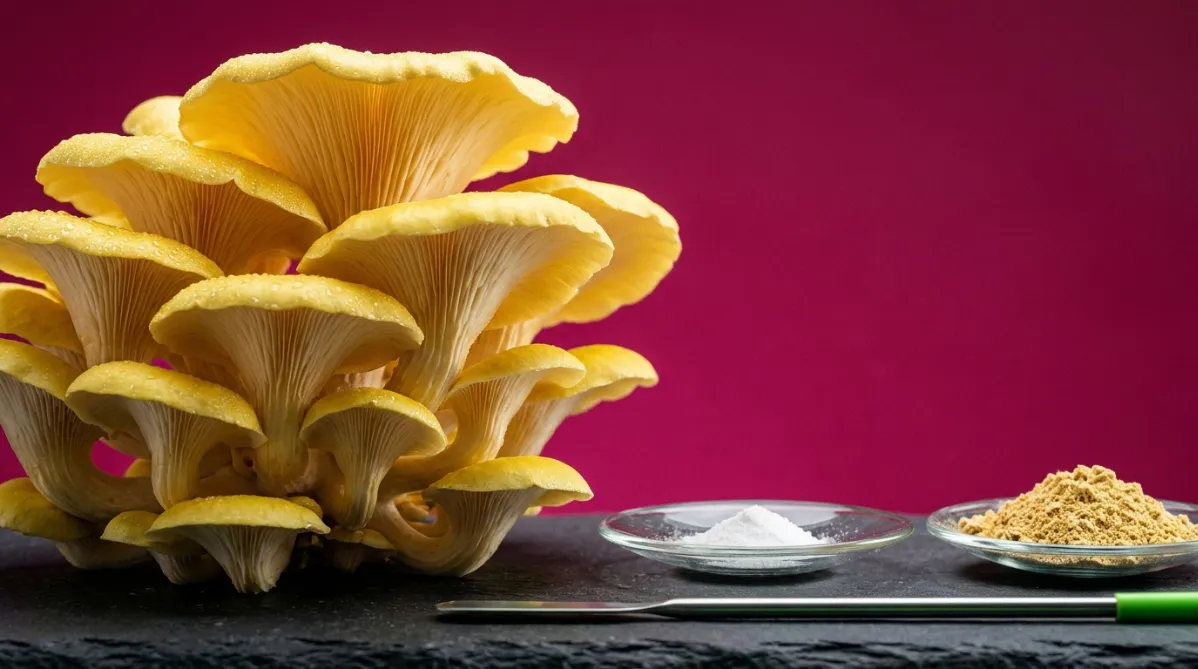
Extreme close-up photograph of a cluster of golden oyster mushrooms (Tamogitake), their ruffled, canary-yellow caps and fine gill structures sharply detailed, shot at a slight low three-quarter angle against a saturated magenta backdrop. In the foreground, a small glass watch dish holds a pinch of fine white crystalline powder, the isolated compound, sitting plain and inert beside a heap of fawn-yellow dried mushroom powder in a second dish. Soft directional studio light from the upper left gives the caps a translucent glow and creates crisp, short shadows. Tiny dew-like droplets cling to the gills. A single thin electric green stem of a lab spatula glints at the edge of the frame. Mood: curious, vivid, quietly skeptical, with the mushroom clearly outshining the isolate. No text or labels.
research

This Mushroom Cut Liver Fat in Rodents—Its Star Compound Didn't

BY NOVA CHEN ·

Ergothioneine is the compound everyone credits for mushrooms' health halo, but a new rodent study complicates that story. Rats and obese mice eating golden oyster mushroom (Tamogitake) powder had less cholesterol and triglyceride in their livers, while mice given pure ergothioneine did not. The mushroom also tended to increase fecal excretion of cholesterol and free fatty acids, and the isolate didn't. The authors conclude the effects can't be attributed to ergothioneine alone. This is rodent-only research, and the mushroom made up a hefty 5% of the animals' diets, so don't swap your liver checkup for a stir-fry.

This page is available in